When to Build a Web App vs a Mobile App
Choose web vs mobile based on workplace reality: connectivity, task design, offline needs, and who must use the product daily.
Teams often ask for “an app” when they mean a product people can use. The better question is where the work happens and what fails if connectivity, screen size, or install friction is wrong.
Choosing incorrectly creates shelfware: a mobile app nobody installs, or a web tool that cannot survive a warehouse with weak signal. Fit the channel to the job.
Prefer web platforms when
- Users work primarily at desks with reliable networks
- Complex tables, admin tools, or multi-panel workflows dominate
- You need fast iteration across roles without store release cycles
- SEO or linkable sharing matters for external audiences
Prefer native or solid mobile when
- Work happens in the field, on a shop floor, or away from desks
- Offline or intermittent connectivity is normal
- Camera, location, or push notifications are core to the job
- One-handed, glanceable task completion matters more than dense UI
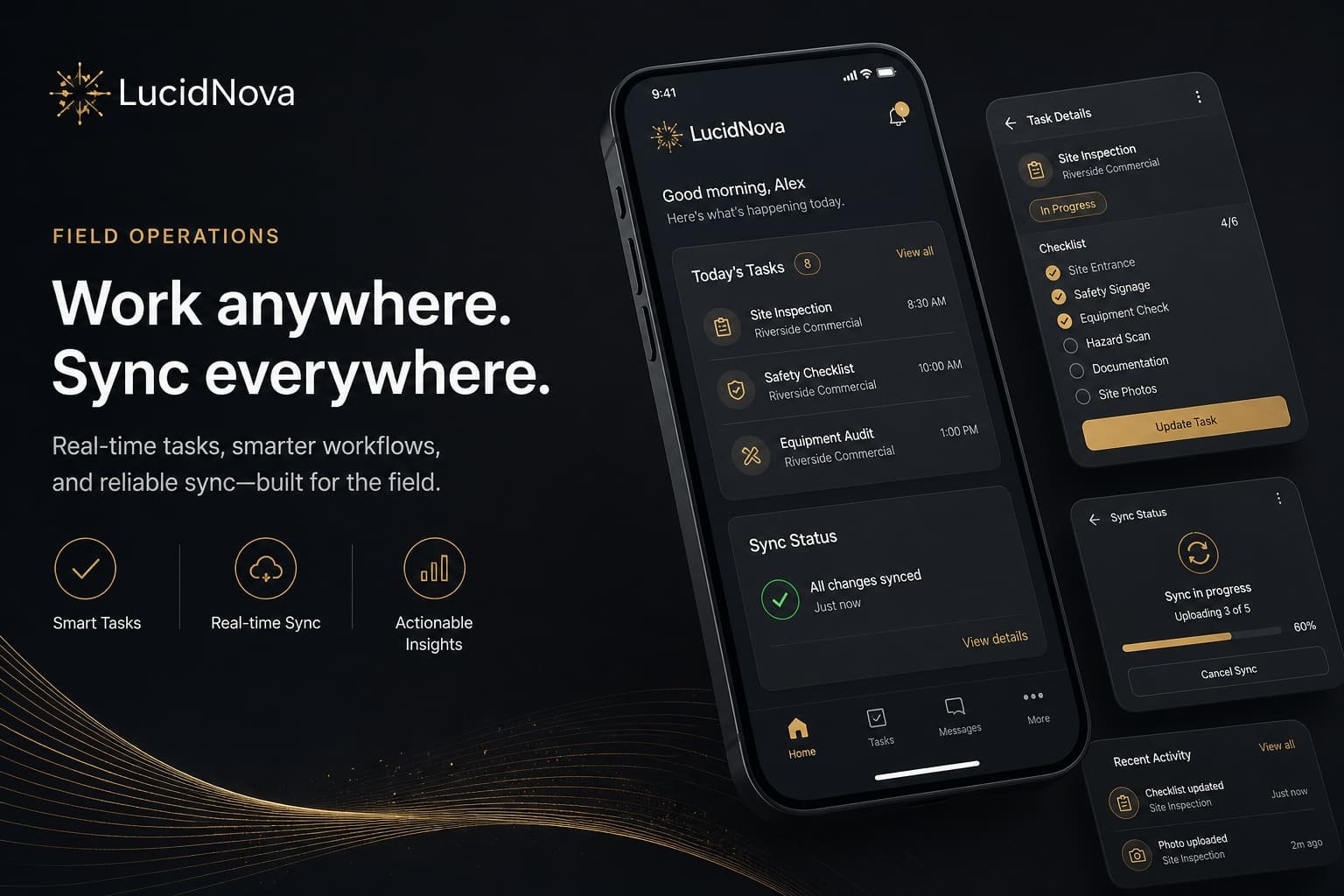
Hybrid paths that often win
Many organizations need both: a web system of record for office roles and a mobile companion for field execution. Start with the channel that owns the highest-friction daily workflow, then extend deliberately.
Progressive web apps can bridge some gaps, but treat offline, camera, and background sync requirements as real engineering work—not assumptions.
Decision checklist
- Where is the user standing when they need the product?
- What happens if the network drops mid-task?
- Who installs and updates the client?
- Which channel must ship first to prove value?
Build for the workplace you have—not the workplace a demo assumes.
How LucidNova helps choose
We recommend web, mobile, or a sequenced combination based on operating reality—so the first stage proves value in the environment where work actually happens.
Contact LucidNova Technologies · hello@lucidnovatech.com · Mumbai, Maharashtra, India