Modern API Integration Strategies for Enterprise Applications
Enterprise API integration: versioned contracts, sync vs event patterns, retries and dead letters, named owners, contract tests, and runbooks that keep connected systems operable.
Most enterprise bottlenecks are integration bottlenecks. Data is trapped in silos, processes stall waiting for sync, and teams invent spreadsheets because nobody owns the connection between systems. A modern API strategy treats each integration as a product—with an owner, a lifecycle, and measurable reliability—not as a script that worked once in staging.
Clever adapters that only one engineer understands do not scale with the organization. What scales is boring clarity: schemas, error codes, idempotency, and documented behavior when partners change fields without warning.
Prefer contracts over cleverness
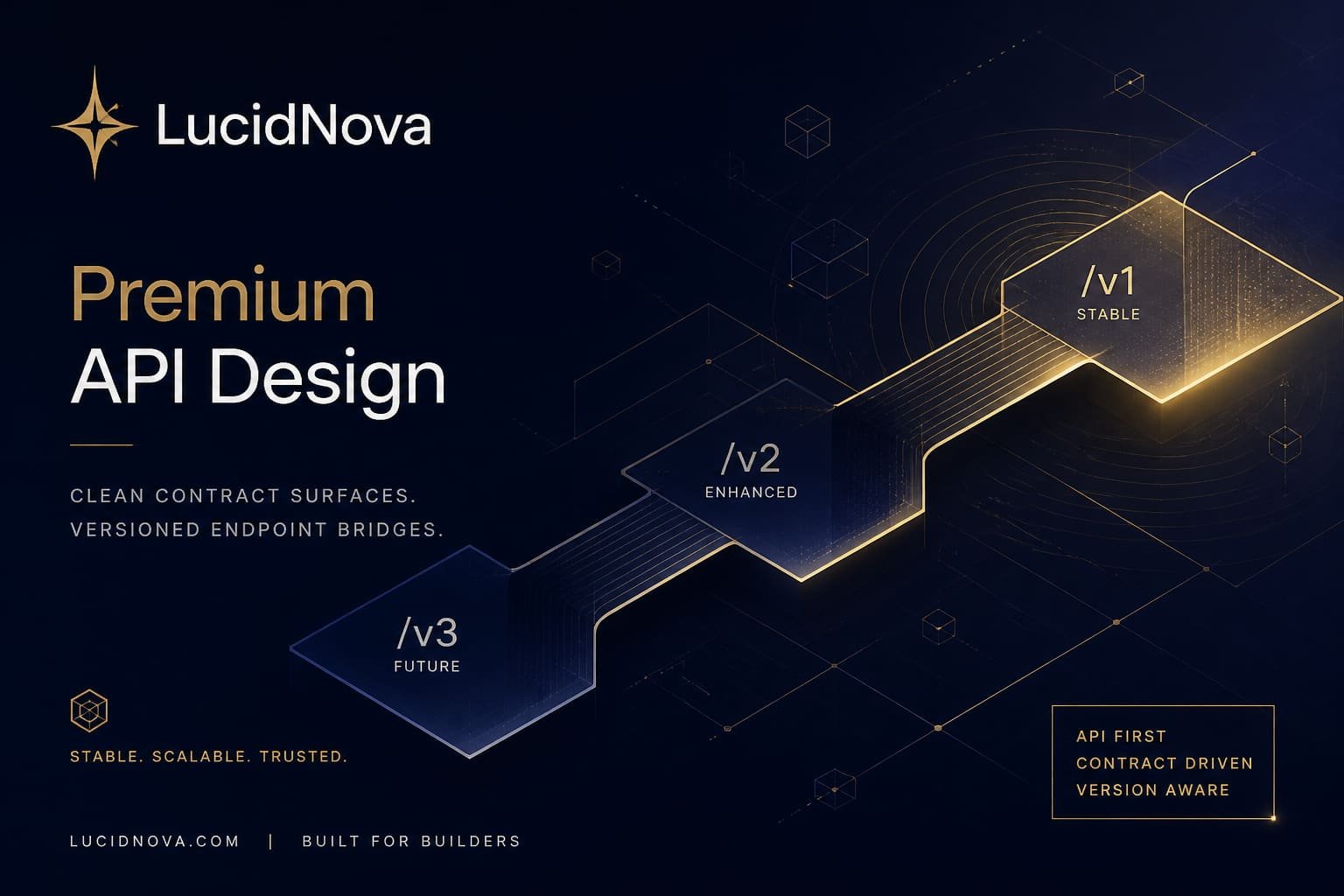
Stable schemas, explicit versioning rules, idempotent writes, and documented error behavior beat fragile point-to-point mappings. Consumers should know what will break when version two ships—and how long version one remains supported.
Publish examples for happy paths and for common failures: validation errors, conflicts, rate limits, and partial outages. Integration partners should not need to read your entire codebase to behave correctly.
Patterns that scale with the organization
- Event-driven updates where near-real-time consistency matters across domains
- Synchronous APIs for user-facing actions that need immediate confirmation
- Retry, backoff, and dead-letter handling for brittle third-party systems
- Clear mapping between business events and technical messages—not opaque field dumps
Ownership is the hidden requirement
Every integration needs a named owner for failures, schema changes, vendor updates, and credential rotation. Without that, “connected systems” become a shared mystery that everyone depends on and nobody maintains.
Ownership includes on-call expectations for critical flows, not only documentation duty. If an integration is business-critical, its error budget and alerting should be as visible as the main application’s.
Design for change, not only for day one
Partner APIs change. Fields deprecate. Rate limits appear overnight. Durable integrations anticipate change with versioning, consumer-driven contract tests, and sandbox verification before production promotion.
Prefer explicit business events over opaque nightly dumps when freshness matters for operations. Prefer simple synchronous calls when a user is waiting at a screen. Matching the pattern to the human moment prevents clever systems that feel unreliable in daily use.
Operational checklist
- Timeouts and backoff policies documented and enforced consistently
- Alerting on error budgets for critical flows—not only on total outage
- Contract tests against partner sandboxes in CI where feasible
- Runbooks for common failure modes: stale credentials, schema drift, partial partner outage
Security and data boundaries at the edge
Integrations move sensitive data across trust boundaries. Use least-privilege credentials per integration, rotate secrets on a schedule you keep, and log payload metadata without storing unnecessary personal data in middleware logs.
When a partner breach or deprecation notice arrives, named owners should know which business processes halt, which can degrade gracefully, and who approves emergency bypasses—before the incident, not during it.
LucidNova designs integrations with these ownership and reliability defaults so connected systems remain operable after launch—not only demo-ready on go-live week.
Contact LucidNova Technologies · hello@lucidnovatech.com · Mumbai, Maharashtra, India