ERP vs Custom Software: Which One Does Your Business Need?
Compare ERP and custom software for growing businesses. Learn when to buy a package, when to build, when to hybridize, and how to choose a fundable first stage.
Choosing between ERP and custom software is rarely about which technology is “better.” It is about whether your operating model is common enough to fit a package—or distinctive enough that forcing it into one creates permanent workarounds.
The costly mistake is emotional: buying a broad suite because it feels safer, or building custom software because it feels unique, without mapping which workflows actually create revenue or risk. A clear decision starts with the work, not the catalog.
When ERP is the sensible choice
ERP works well when your processes are close to industry norms, you need broad module coverage quickly, and your team can adapt to the product’s workflow. Finance, inventory, and standard HR often land here successfully because the package encodes decades of common practice.
ERP also wins when compliance reporting, accounting controls, and vendor ecosystem integrations matter more than inventing a bespoke process. In those domains, reinventing the wheel usually creates risk without advantage.
When custom platforms win
Custom software is stronger when competitive advantage lives in the workflow itself: unusual approval chains, partner portals, multi-role operations, or productized services that packages cannot express cleanly. If your edge is how work moves, a package that forces generic steps will slowly erase that edge.
- Your process is a differentiator, not a commodity
- Teams already fight the tool with spreadsheets and side systems
- You need integrations and permissions packages cannot model
- You want ownership of roadmap and data model over vendor release cycles
- Change velocity matters more than module breadth
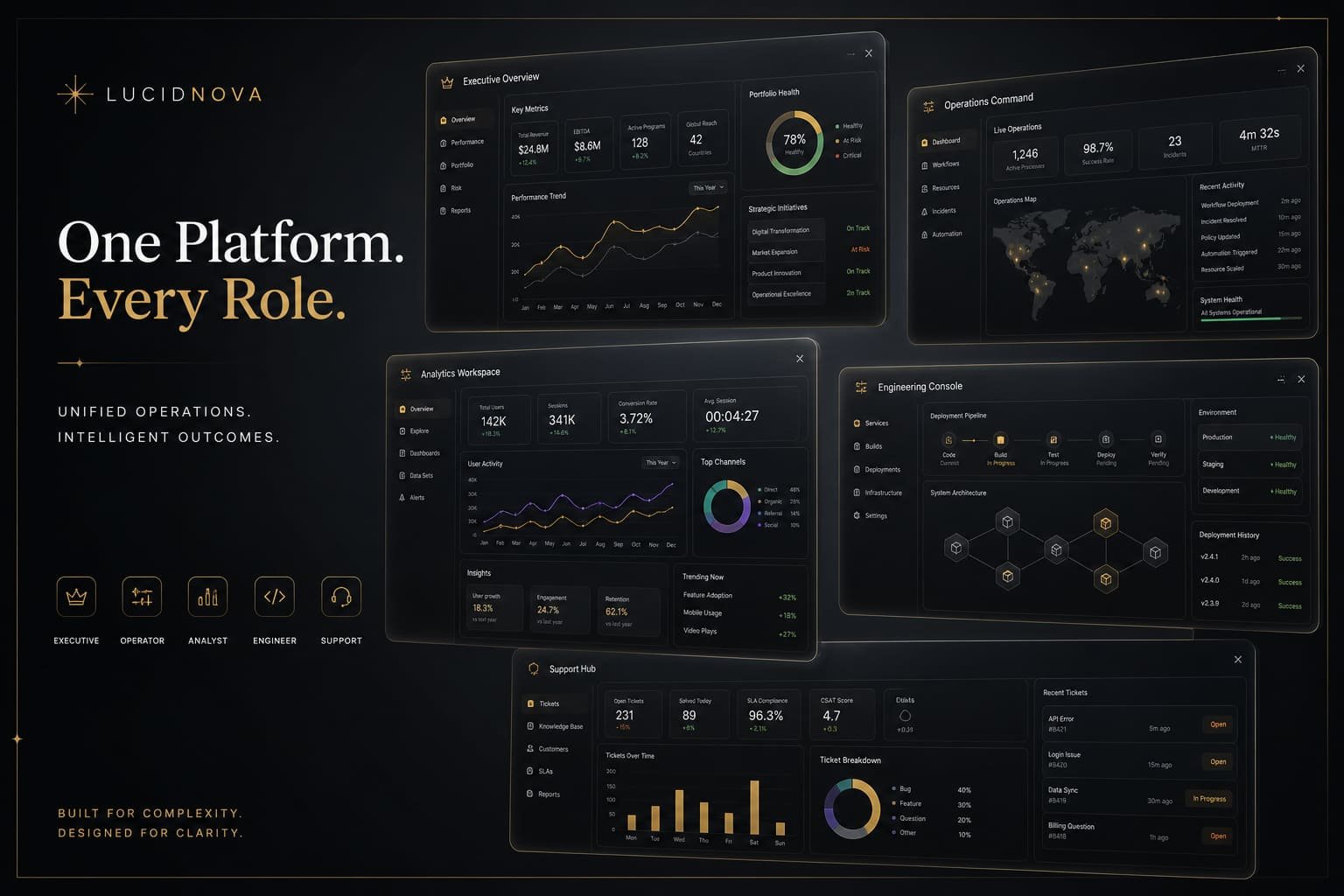
A practical decision frame
Map the workflows that create revenue or risk. If those workflows are standard, buy. If they are unique and currently held together by tribal knowledge, design a system around how work actually happens. Many organizations land on a hybrid: ERP for commodity finance, custom systems for the operating core.
Hybrid patterns that work
- ERP as financial system of record + custom ops portal
- Packaged CRM + custom partner workflows
- Standard HRMS + custom field operations apps
- Packaged billing + custom subscription orchestration
Cost is more than license fees
Compare total operating cost: configuration debt, integration maintenance, training, side systems, and the speed at which you can change a critical process. A cheaper package can become expensive if every exception requires a spreadsheet.
How LucidNova approaches the choice
We start with fit, not a preferred stack. Discovery clarifies whether a package, a custom platform, or a sequenced combination is the responsible path—and what a first stage should deliver before larger investment. The goal is a decision you can defend commercially, not a technology preference dressed up as strategy.
Contact LucidNova Technologies · hello@lucidnovatech.com · Mumbai, Maharashtra, India