Discovery Workshops That Prevent Expensive Rebuilds
How to run a software discovery workshop that clarifies workflows, constraints, and a fundable first stage—before expensive rebuilds become inevitable.
Many rebuilds are not caused by bad engineers. They are caused by building the wrong operating model with confidence. Teams skip discovery because it feels slow, then spend months correcting assumptions that a few structured sessions could have caught.
A good discovery workshop is not a brainstorming retreat. It is a working session that produces decisions: who the primary user is, which workflow matters first, what must remain out of scope, and what evidence would justify the next stage of investment.
What discovery must produce
Leave with artifacts people can use, not only alignment feelings. The minimum useful output is a shared problem statement, a primary journey map, a constraint list, and a first-stage recommendation with explicit non-goals.
- Named primary user and secondary stakeholders
- Current-state workflow with real exception paths
- Systems of record and mandatory integrations
- Success metric for stage one in operational language
- A written list of what will wait until later
Who needs to be in the room
Include the people who do the work, not only sponsors who approve budget. Operators know where spreadsheets and chat threads hold the real process. Sponsors know commercial constraints. Both perspectives are required.
If decision-makers cannot attend, discovery becomes a research note without authority. Schedule shorter sessions with the right people rather than long sessions with the wrong ones.
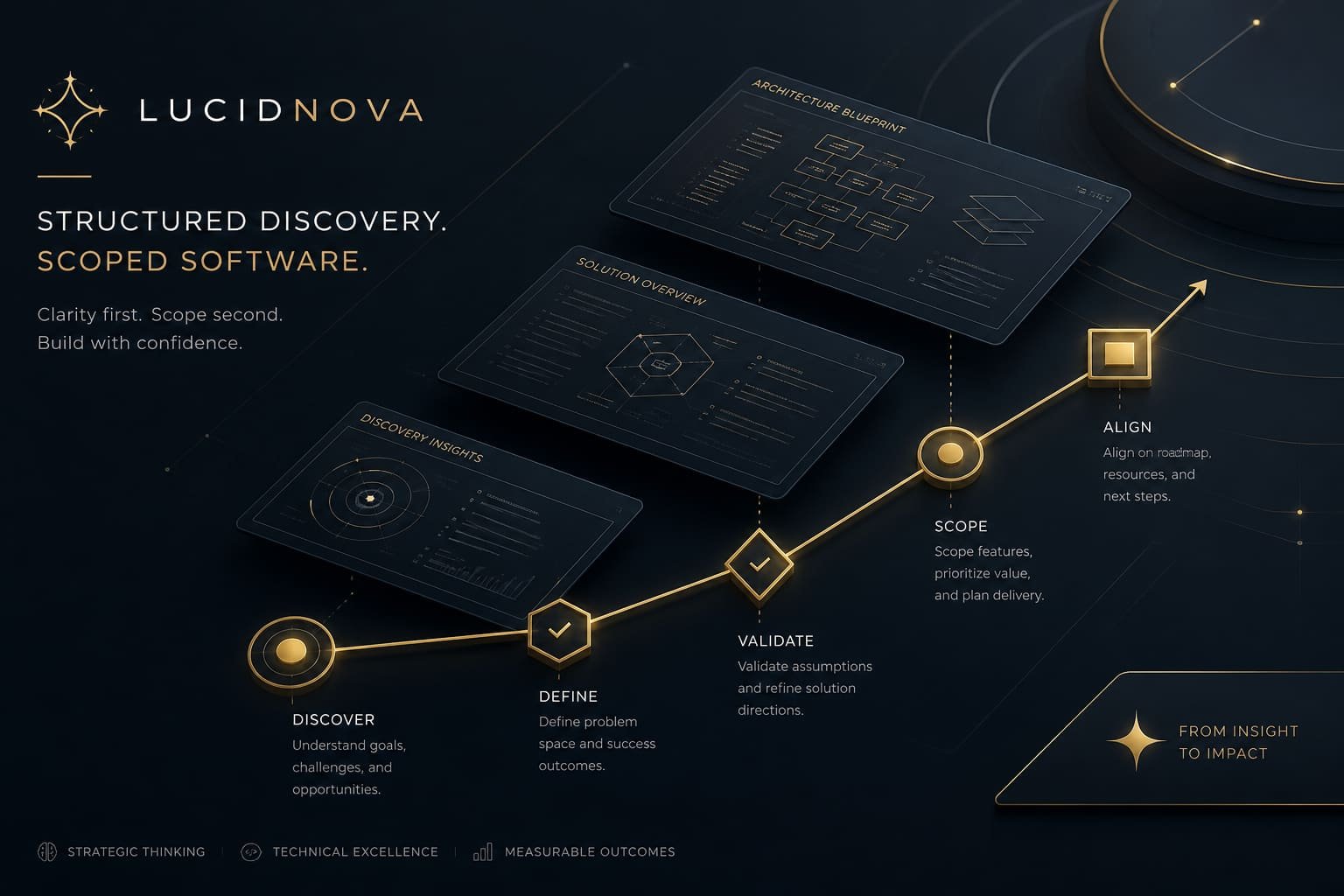
Facilitation habits that keep sessions honest
- Separate current-state facts from future-state wishes
- Challenge “everyone needs this in v1” claims with evidence
- Capture disagreements instead of forcing false consensus
- End each session with owners and next decisions
From workshop to first stage
Discovery earns its keep when it shrinks uncertainty enough to fund a responsible first stage. That stage should answer the highest-risk questions with working software—not recreate the entire vision in miniature.
If discovery only produces slides, you held a meeting. If it produces a fundable first stage, you reduced rebuild risk.
How LucidNova runs discovery
We run discovery to create commercial clarity: fit, scope, and terms both sides can stand behind. When an engagement is not right, we say so early—before rebuild cost becomes the teacher.
Contact LucidNova Technologies · hello@lucidnovatech.com · Mumbai, Maharashtra, India