Designing a System of Record That Teams Will Use
Design a system of record teams use: one authoritative fact per domain, role-aligned permissions, fast operator UX, audit trails, and deliberate retirement of shadow trackers.
Many organizations already own platforms labeled “system of record.” What they lack is a record people believe. When trust is low, spreadsheets return, chat becomes the database, and the official tool becomes a reporting afterthought—updated just enough to pass audits.
Trust is built through daily reliability, not executive mandates. Operators must see that updating the official system is faster and safer than maintaining a parallel copy—and that managers make decisions from the same data they enter.
What makes a system of record trustworthy
A system of record is less about the logo on the login screen and more about operational clarity: who owns each fact, how it changes, and what happens when two sources disagree.
- One authoritative place for each critical fact—no ambiguous “master” across tools
- Permissions that match real roles, including contractors and partners where needed
- Workflows that complete without unofficial side channels for “just this once”
- Audit history for contested changes, with who, when, and prior value
Design for the people who enter data
If data entry is painful, quality collapses. Optimize the daily path for operators who are busy, interrupted, and measured on throughput—not only for executive dashboards that refresh overnight.
Reduce fields to what decisions actually require. Prefill from integrations. Validate early with messages people understand. Batch work into tasks that match how shifts actually run.
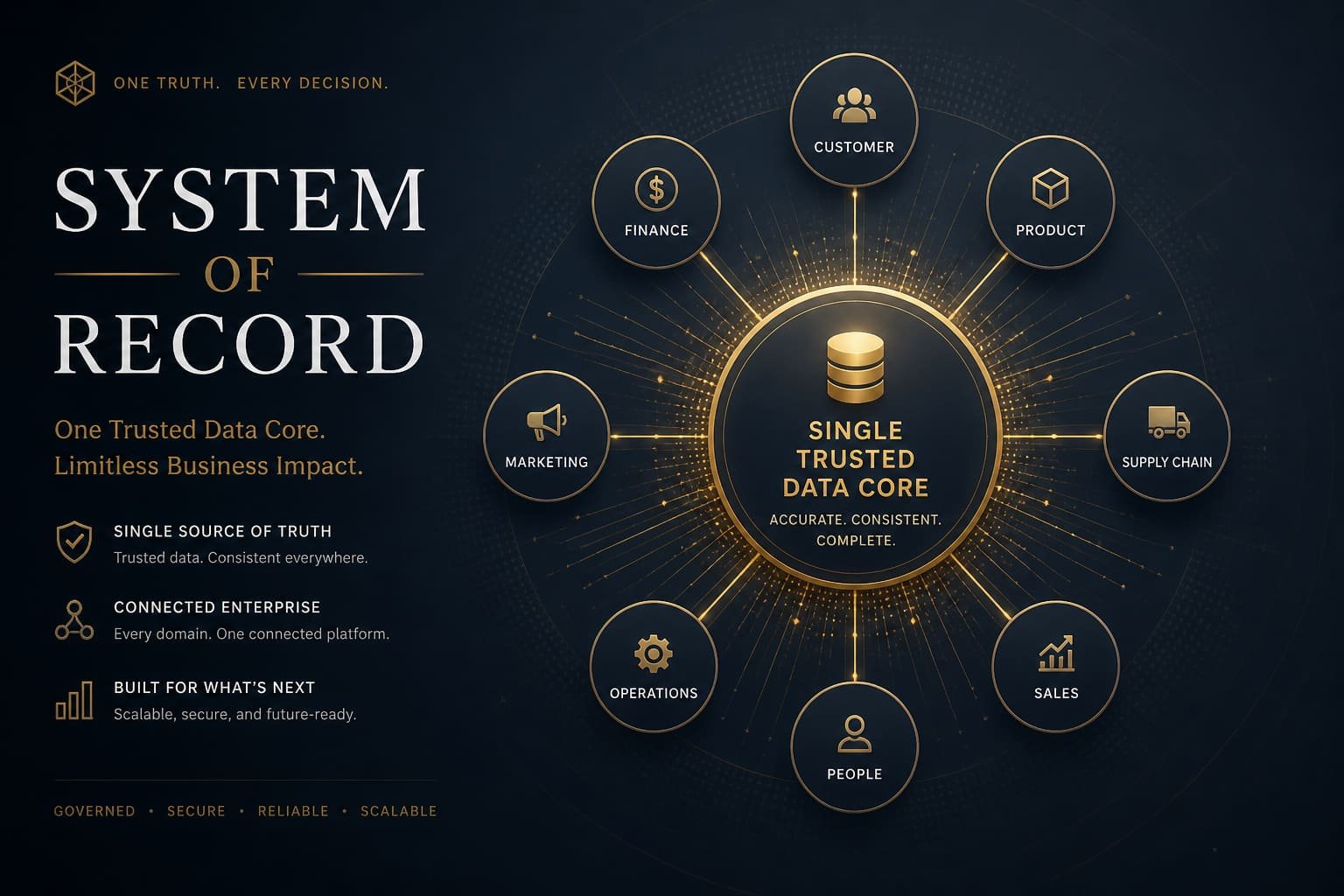
A system of record that is hard to update will never remain the record.
Kill the side systems on purpose
Every unofficial spreadsheet is a product requirement in disguise. Either the official system is missing a field, too slow, politically untrusted, or owned by the wrong department. Interview the spreadsheet maintainer—they often know the real workflow better than the RFP described it.
- Make the daily entry path faster than copying into a shadow file
- Show users that their update is the authoritative one used downstream
- Give managers reports from the same source operators touch—not a separate warehouse lagging by days
- Retire duplicate trackers with a clear cutover date and support during transition
Migration without mythology
Big-bang migrations fail when daily habits do not move with the data. Move the highest-friction workflow first. Prove daily use under real load. Then migrate adjacent processes with the same owner and the same success criteria.
Governance without bureaucracy
Define who may add fields, retire fields, and override values. Publish those rules where operators see them. Heavy governance kills adoption; absent governance kills data quality. The balance is few, clear rules tied to real decisions.
When disputes arise, the audit trail should settle them in minutes—not in a meeting series. That reliability is what convinces teams to stop maintaining parallel copies.
LucidNova sequences systems of record this way so adoption leads data migration—not the reverse, where empty official systems and full shadow books coexist for quarters.
Contact LucidNova Technologies · hello@lucidnovatech.com · Mumbai, Maharashtra, India