Building SaaS That Scales Without Fragile Shortcuts
Build scalable SaaS with clear tenancy, evolving RBAC, billing as a product concern, journey-focused performance, and release discipline—sequenced so investment matches evidence.
Founders often ask for “scalable architecture” before they have ten paying customers. The better question is what must be true so the product can grow without rewriting the foundation every quarter—and without breaking trust when billing, permissions, or data isolation fail in production.
Scale is as much operating discipline as it is infrastructure. A modest stack with clear tenant boundaries, observable errors, and staged releases often outlasts an early microservice maze that nobody can debug on a Monday morning.
Foundations that matter early
Some shortcuts are recoverable. Weak tenancy, ambiguous permissions, and incorrect subscription state are not—they surface directly to customers and procurement reviewers.
- Clear tenant boundaries and provable data isolation on every path
- Identity, roles, and permission models that can evolve without breaking customers
- Subscription and billing treated as first-class product concerns, not a spreadsheet sidecar
- Observability: structured logs, metrics, and named error ownership
Architecture choices with room to grow
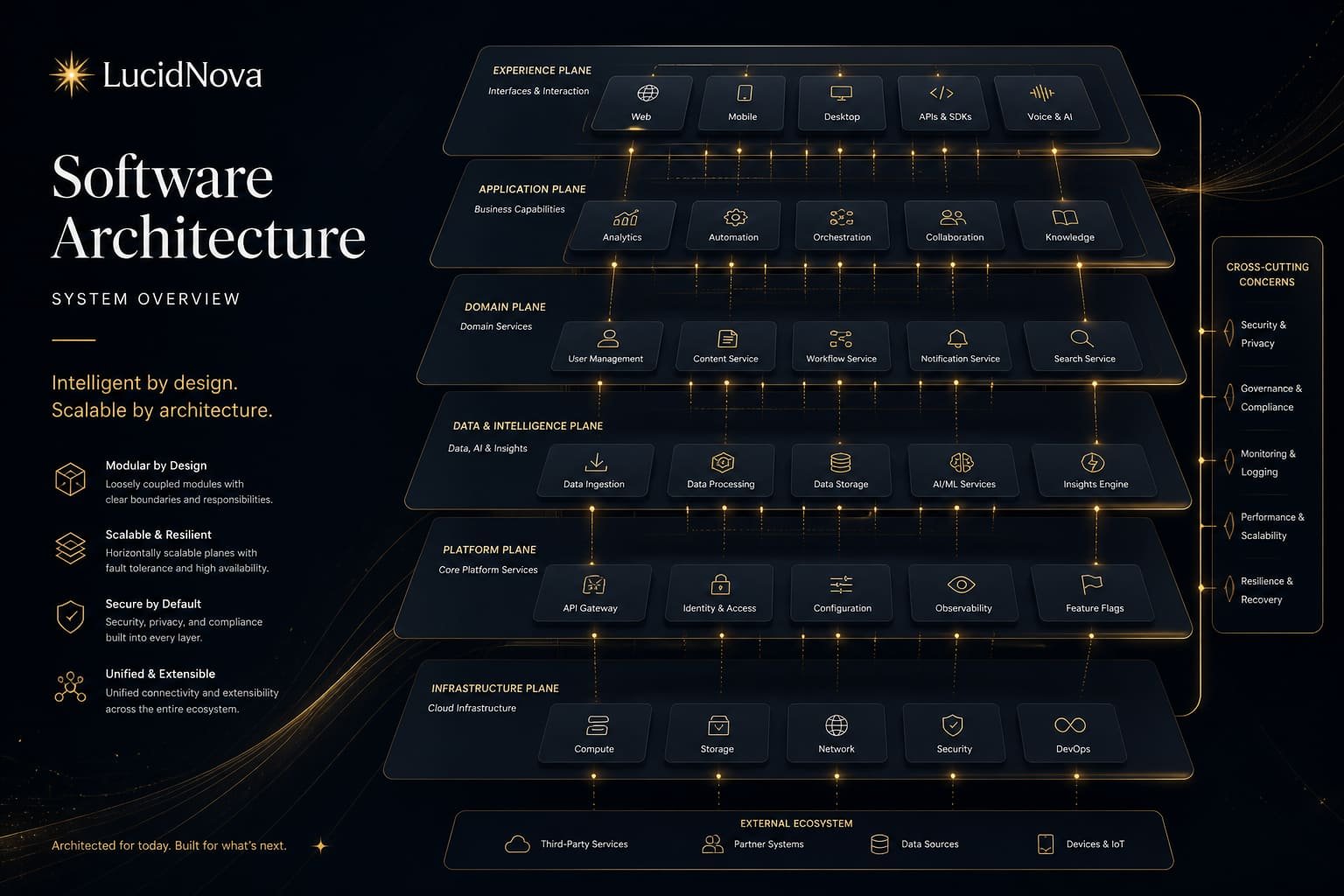
Start modular, not microscopic. A well-bounded monolith with clear domain modules often outperforms premature service extraction. Split when team ownership, release cadence, or scale pressure makes the cut unavoidable—not when a diagram looks impressive.
Document module seams even if you deploy as one unit. Those boundaries make later extraction cheaper and keep new engineers from crossing concerns accidentally.
Performance is a product requirement
Measure the journeys that matter: signup, invitation acceptance, the core daily action, plan changes, and invoice retrieval. Optimize those paths first with real data. Synthetic load tests without customer-shaped traffic patterns are expensive theater.
Set budgets for critical routes—latency, error rate, and payload size—and review them when features ship. Performance regressions are product bugs, not “infra tickets.”
Release and support discipline
SaaS fails quietly when releases are fragile and support cannot see production state. Feature flags, staged rollouts, migration scripts with rollback plans, and clear ownership after launch are as important as the UI polish in a demo.
Support and engineering should share the same view of tenant health: recent errors, billing status, integration failures, and feature flag state. Without that, every ticket becomes archaeology.
What to postpone on purpose
You can postpone exotic sharding strategies or multi-region active-active setups. You should not postpone tenant boundaries, authentication, billing correctness, or basic observability. Those are expensive to retrofit and painfully visible when they fail.
A useful rule: optimize for the next order of magnitude of customers and team size, not an imaginary future of millions. Premature distribution complexity often slows product iteration more than it protects you.
A staged build path
- Stage 1: core tenancy, auth, and one paid workflow end to end
- Stage 2: billing reliability, admin tooling, and audit-friendly exports
- Stage 3: integrations, expansion modules, and partner-facing APIs
Each stage should end with evidence: customers using the workflow, finance trusting invoices, and engineering able to diagnose incidents without heroics. LucidNova helps teams sequence SaaS delivery this way so investment matches evidence—not ambition alone.
Contact LucidNova Technologies · hello@lucidnovatech.com · Mumbai, Maharashtra, India